
Our team of experts offers regular updates on FPE and life safety best practices, code modifications and more.
March 31, 2026
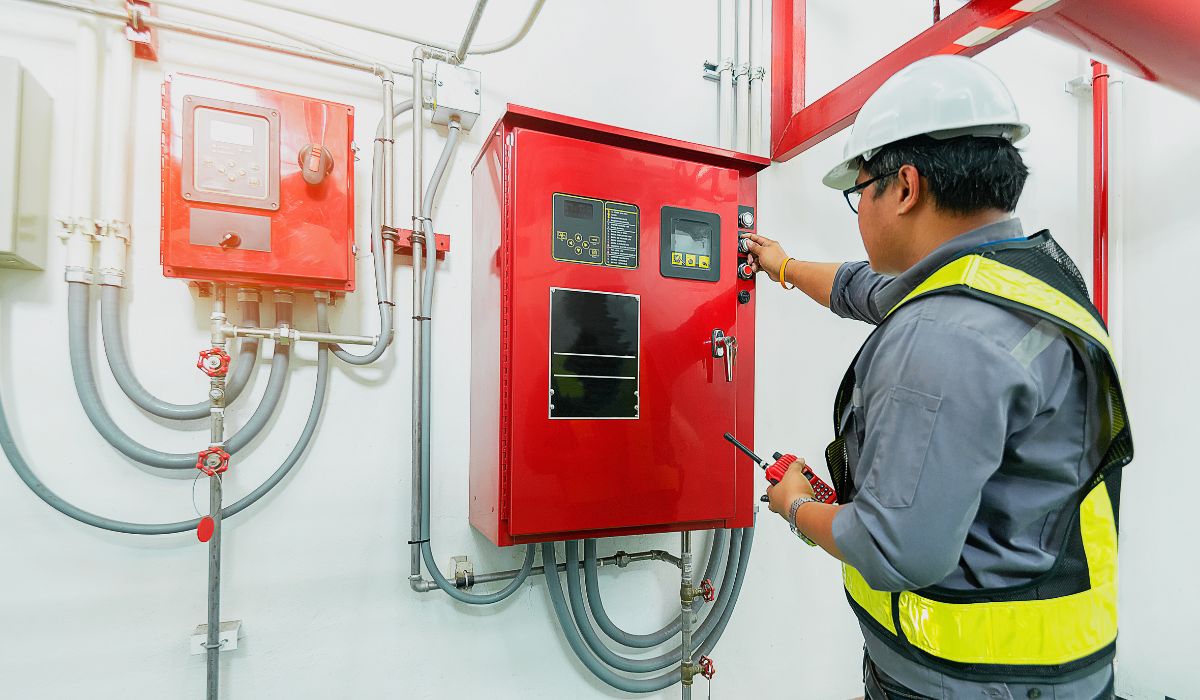
Few engineering disciplines can claim what fire protection engineers can: every day, their work directly saves people’s lives.
Fire protection engineers shape the systems and strategies that protect people when it matters most. They play an integral part in evacuation routes that guide occupants to safety, model fire behavior to anticipate how fire and smoke spread, and engineer suppression and smoke control systems that buy critical time in emergencies. Every sprinkler, every exit component, every detection system reflects the lessons learned from past incidents, and a fire protection engineer is tasked with applying that knowledge to keep building occupants safe.
The impact is immediate and tangible. When a hospital evacuates safely, when a high-rise fire is contained to the origin of the fire, when workers escape an industrial fire incident without injury, a fire protection engineer's expertise helped to make that possible.
If you're drawn to a career that combines rigorous technical challenge with genuine, life-saving purpose, fire protection engineering offers exactly that: strong job prospects, intellectual variety, and the knowledge that your work truly matters.
The scope of fire protection engineering extends far beyond the design of sprinkler systems. That's just one tool in a comprehensive toolkit.
Fire protection engineers begin with a life safety strategy. They analyze how occupants evacuate buildings and assist architects in designing escape routes that accommodate human behavior and movement patterns. They conduct egress analyses to ensure code compliance while accounting for real-world factors such as panic, congestion, and occupant mobility.
They use advanced fire modeling software such as the Fire Dynamics Simulator (FDS) to understand how fires develop in specific spaces, spreading and behaving differently depending on materials, ventilation, and geometry.
Beyond fire itself, fire protection engineers design smoke control systems that prevent smoke from overwhelming escape routes. They assist building owners in managing hazardous materials in their buildings to prevent fires before they start. If a fire does occur, the fire protection engineer’s system design will ensure that the fire is contained to the area of origin. They integrate detection, suppression, and compartmentalization into cohesive safety strategies.
This work happens across diverse settings. Consulting firms employ fire protection engineers to support architects and building owners. Industrial facilities rely on their expertise to protect workers and equipment. Energy plants, data centers, healthcare facilities, and high-rises all rely on specialized expertise. Organizations such as UL Solutions employ FPEs to test the flammability and smoke generation of building materials to ensure these materials do not introduce unnecessary risks into a building’s construction or test the capabilities of new fire protection systems. Insurance agencies hire FPE’s to conduct property condition assessments or investigate incidents. The diversity of environments keeps the work intellectually stimulating while reinforcing the universality of fire protection concerns.
READ MORE: What Do Fire Protection Engineers Do? 8 Essential Services
A fire protection engineering career doesn't require an undergraduate degree specifically in Fire Protection Engineering. In fact, you can enter the field holding degrees in mechanical, electrical, or civil engineering, among other engineering disciplines. These foundational disciplines provide the thermodynamics, fluid mechanics, and basic engineering principles required for fire protection engineering.
That said, universities offering dedicated FPE programs accelerate entry into the field. The University of Maryland operates the most recognized program for nationwide licensure reciprocity, as it provides an ABET-accredited Bachelor of Science in FPE. Eastern Kentucky University and Oklahoma State University also offer established programs with strong industry connections. These degree programs offer FPE-specific coursework, giving graduates specialized knowledge from day one.
Whichever path you choose, prioritize courses in thermodynamics, chemistry, hydraulics, and advanced mathematics. These subjects underpin the knowledge required to perform fire modeling and fire protection system design. Equally important: verify that your program holds ABET accreditation through the Engineering Accreditation Commission (EAC). This designation is essential for professional licensing across all states and dramatically streamlines your PE licensure process. The EKU and OSU programs are considered “Engineering Technology Accreditation Commission (ETAC)” and allow for licensure in a majority of states, although many require additional experience or further educational requirements for ETAC degree holders to become licensed.
Research your target state's specific requirements before enrolling. Some states accept any ABET-accredited engineering degree plus relevant experience. Others require additional engineering coursework or specific industry experience. Starting this research early prevents unnecessary detours. Unfortunately, many degree programs do not fully address or explain the PE licensure process to students, and therefore, many people have been caught off guard at the beginning of their careers and have had to complete additional steps that wouldn’t have been necessary if the steps to licensure were discussed early in the degree program.
A Professional Engineer (PE) license is essential in fire protection engineering. Authority’s Having Jurisdiction officials (AHJs — government bodies that enforce building codes) typically require PE-stamped design documents or analyses. Without licensure, your career ceiling and earning potential both drop significantly.
The path to PE follows the "Three E's”: Education, Examination, and Experience. You need a four-year ABET-accredited engineering degree, passage of the Fundamentals of Engineering (FE) exam, typically four years of supervised professional experience, and finally passage of the Principles and Practice of Engineering (PE) exam. This progression typically takes at least eight years from the start of a bachelor's degree program to full licensure.
A PE license transforms your market value. Licensed engineers earn substantially higher compensation, gain professional prestige, and access independent consulting opportunities. Many employers actively recruit licensed professionals for senior roles.
Beyond the PE license, consider pursuing additional certifications. NICET (National Institute for Certification in Engineering Technologies) demonstrates specialized knowledge. CFPS (Certified Fire Protection Specialist) signals further dedication to the career field and is recognized as a professional credential in parts of the world outside of the USA. CFEI (Certified Fire and Explosion Investigator) opens forensic investigation opportunities, including law enforcement and insurance investigations, and serves as an expert witness in criminal and civil proceedings. None are required, but all enhance career advancement prospects.
Becoming a successful fire protection engineer requires a dual focus on rigorous technical expertise and excellent interpersonal communication skills. The most effective professionals master both to ensure their critical designs are not only sound but also successfully implemented.
READ MORE: How to Choose a Fire Protection Consultant: 6 Key Factors to Consider
The field offers strong financial prospects. Fire protection engineers rank among the highest-paid engineering disciplines according to the Society of Fire Protection Engineers (SFPE). Job growth remains consistent, particularly in heavy industrial sectors, energy facilities, and consulting firms. The niche nature of the specialty means fewer practitioners competing for positions.
Will artificial intelligence eliminate fire protection engineering? Unlikely. AI will augment the profession. It will automate routine calculations, accelerate design iterations, and analyze vast datasets faster than humans ever could. But AI cannot exercise judgment over code alternatives, creatively solve novel safety challenges, or bear responsibility for life safety decisions. Those require human expertise and professional accountability.
Getting started now means excelling in mathematics and science courses. These foundational subjects predict success in engineering programs. Research your target state's licensure requirements. Consider volunteering with local fire departments to gain exposure to the profession, understand fire behavior firsthand, and meet practicing professionals. SFPE offers student memberships at a discount, which can greatly assist in networking and exposure to the industry.
Begin developing the communication abilities that will define your career. Explain technical concepts clearly. Ask thoughtful questions. Seek mentorship from experienced engineers.
Becoming a fire protection engineer follows a clear, achievable path: earn an ABET-accredited engineering degree, pass the FE exam, gain professional experience under supervision, earn your PE license, and continue developing technical and communication expertise. The timeline spans roughly eight years. The destination justifies the investment.
If you have questions, I am available to help provide guidance to students considering FPE as a career. Email me at SVizgirda@SummitFireConsulting.com.
Learn more about fire protection engineering and how our engineers can help ensure your next project is safe and secure. Contact Summit Fire Consulting today to speak with an expert.
