
Our team of experts offers regular updates on FPE and life safety best practices, code modifications and more.
February 24, 2026
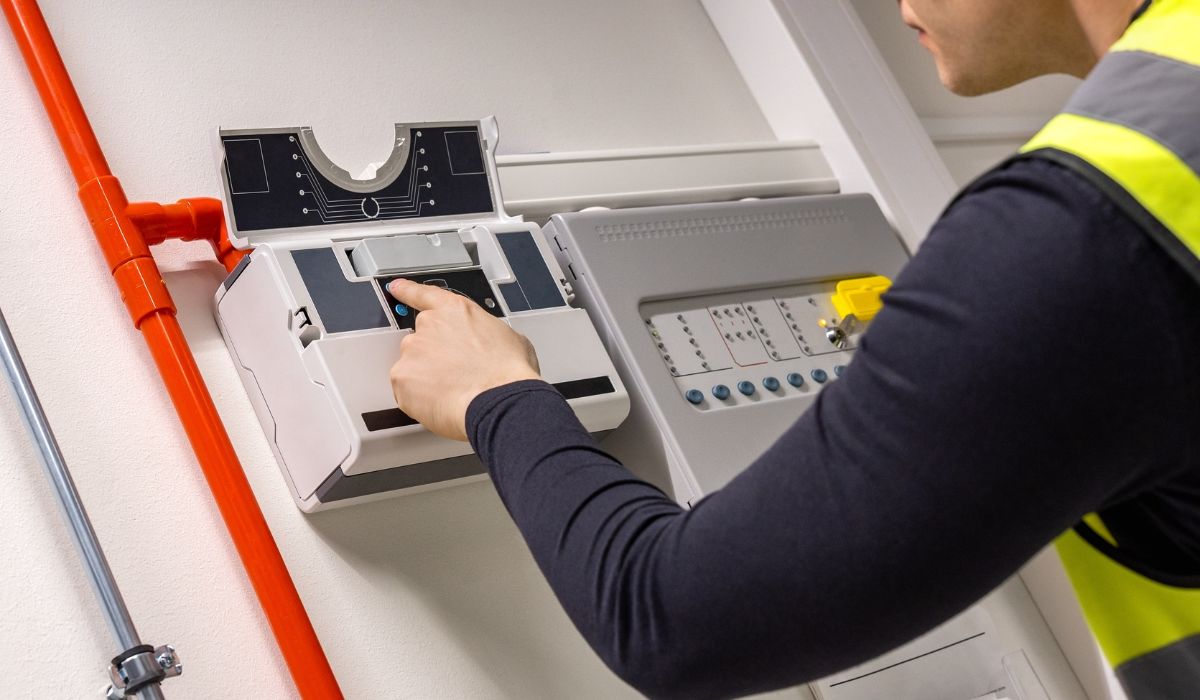
A fire protection consultant helps your building meet code requirements and protect people and property from fire hazards, all while providing customers peace of mind and confidence. But with many consultants offering fire protection engineering services, how can you find the right partner? In this blog, we define the role of a fire protection consultant and outline seven considerations to help you choose wisely.
A fire protection consultant can provide a number of fire protection engineering services, using fire science and engineering principles to ensure the safety of people and property. These services include:
Now that you understand the role of a fire protection consultant, here are seven key factors to consider when selecting one for your project.
READ MORE: What Do Fire Protection Engineers Do? 8 Essential Services
Before you hire a fire protection consultant, keep these considerations in mind to make an informed decision.
While no project is exactly alike, it’s important to find a fire protection consultant who has successfully navigated projects similar in scope, complexity, and industry to your own. Industry-specific experience is crucial because fire and life safety requirements are highly dependent on the occupancy type and operational processes involved.
For instance, a consultant experienced solely in residential buildings may lack the specialized knowledge required for a complex manufacturing plant. Industry expertise ensures familiarity with unique codes and best practices, preventing costly errors. Specialized project types requiring this depth of knowledge include commercial and industrial facilities, hazardous materials environments, manufacturing and lithium-ion battery facilities, and complex or performance-based designs.
To accurately gauge a consultant's capabilities, you should ask targeted questions about their portfolio, such as describing comparable projects, detailing challenges they encountered and how they solved them, and outlining the approval process with the Authorities Having Jurisdiction (AHJs).
READ MORE: How Hazardous Materials Affect Building Design
Relevant experience is a must, but it must be verified through their credentials, licensing, and certifications. A properly credentialed consultant brings an authoritative level of expertise and accountability that directly impacts the project's success. Their qualifications provide assurance that they possess the foundational knowledge and ongoing training required to navigate complex, constantly evolving fire and life safety codes.
When assessing a consultant's qualifications, it's best to find a fire protection consultant with a professional engineering (PE) license. Without this license, the consultant cannot legally prepare, sign, and seal engineering drawings and other technical documents. Oftentimes, states require fire protection consultants to have a PE license. Although it is not required, having a PE license increases authority and credibility.
Below are a few other credentials to consider when selecting the right consultant for you:
Ultimately, these credentials matter because they establish credibility and significantly ease the path toward regulatory approvals. Hiring a highly credentialed consultant is an investment in both safety and the smooth execution of your project, providing essential peace of mind.
A properly credentialed and experienced fire protection consultant should also have a deep, up-to-date knowledge of applicable fire and life-safety codes and standards. Expertise in this area is non-negotiable, as compliance is the primary driver for any fire protection project.
A competent consultant must possess comprehensive familiarity with foundational national standards and codes, including:
A fire protection consultant shouldn’t just be familiar with the standard—they also need to stay up-to-date with standards as they evolve, understand which editions are adopted, and apply local and state amendments. Specialized, localized knowledge is vital for smoothly navigating the approval process with the AHJ, minimizing costly delays and preventing late-stage redesigns.
READ MORE: NFPA 101: Understanding Life Safety Code Requirements
When selecting a fire protection consultant, it is crucial to understand their expertise in prescriptive vs. performance-based design. Prescriptive design is based on rigid, codified rules (e.g., "hallways must be 60 inches wide"), which is straightforward but limits flexibility.
Meanwhile, performance-based design focuses on achieving a measurable safety objective using complex fire modeling and engineering calculations. A consultant proficient in this approach can demonstrate that an alternative design provides safety equivalent or superior to the prescriptive code, offering innovative solutions where standard rules are impractical.
A consultant with performance-based expertise is invaluable for complex projects. They provide essential design flexibility that can lead to cost savings. For instance, when prescriptive code requirements are technically or economically impractical, a fire protection consultant can optimize systems to safely reduce the need for certain sprinklers or fire-rated assemblies.
This expertise is also necessary for securing alternative compliance for mixed-use developments and large-volume spaces. A consultant who can navigate these complex scenarios will save you time and money without compromising safety.
An often overlooked consideration when hiring a fire protection consultant is their ability to communicate and collaborate effectively. Successful communication is vital for ensuring that complex fire safety concepts are clearly understood by all project stakeholders, including developers, facility managers, and contractors.
Equally important is day-to-day responsiveness. Fire protection issues often arise under tight deadlines and high stress, and a consultant who promptly returns calls and emails provides clarity, reassurance, and momentum when it matters most.
A capable consultant must demonstrate the ability to serve as a central coordinator, seamlessly integrating fire protection requirements with the work of other disciplines. This includes collaborating closely with:
Crucially, strong collaboration and clear communication with the AHJs are essential for streamlining the permitting process. A responsive consultant who proactively engages AHJs, addresses questions quickly, and keeps the project team informed can significantly reduce uncertainty, anticipate potential conflicts, and avoid costly delays or late-stage redesigns.
READ MORE: Who Do Fire Protection Engineers Work With? 6 Teams They Support
Finally, a fire protection consultant’s reputation is an essential validator for all the preceding considerations. In the specialized field of fire protection consulting, a firm's reputation is built on trust, demonstrated expertise, and reliability. A strong professional reputation signals that a consultant has consistently delivered high-quality, compliant, and cost-effective solutions for past clients, giving you confidence in their ability to manage the critical safety aspects of your project.
To gauge a consultant's standing, you should look beyond simple marketing claims and seek tangible evidence of client satisfaction. This evidence includes client testimonials, a history of repeat clients, and evidence of long-term relationships with developers, architects, and facility owners. Repeat business and sustained relationships are powerful indicators that a consultant not only meets expectations but also consistently provides value and avoids complications throughout the project lifecycle.
Ultimately, references serve as the final layer of due diligence, validating a consultant's technical expertise and professionalism. Positive, detailed feedback will confirm the consultant’s ability to deliver a smooth and successful project, making them a worthwhile investment in your building's safety and regulatory compliance.
It can be hard to determine when a fire protection consultant is needed for a specific project. Sometimes a project may have obvious fire safety needs, such as installing a new sprinkler system in a commercial building.
Other times, the need may be less clear, perhaps involving complex code interpretations for an unconventional design or a detailed risk assessment for a facility handling hazardous materials.
A good rule of thumb is to involve a consultant early in the design process if the project involves new construction, major renovations, changes in occupancy or use, or any situation where compliance with fire and life safety codes is complex. Waiting until the construction phase to address fire protection issues can lead to costly delays, change orders, and even potential redesigns.
When finding a fire protection consultant, several factors come into play. From communication skills to certifications, vetting your options and prioritizing expertise, experience, and collaboration is the key to a successful fire protection plan. By carefully evaluating these seven key factors, you can secure a fire protection consultant who will act as a trusted partner, ensuring the safety, compliance, and long-term success of your project.
At Summit Fire Consulting, we design and implement fire protection solutions tailored to your specific needs. Contact us to learn how our fire protection engineering services can support your next project.
