
Our team of experts offers regular updates on FPE and life safety best practices, code modifications and more.
March 24, 2026
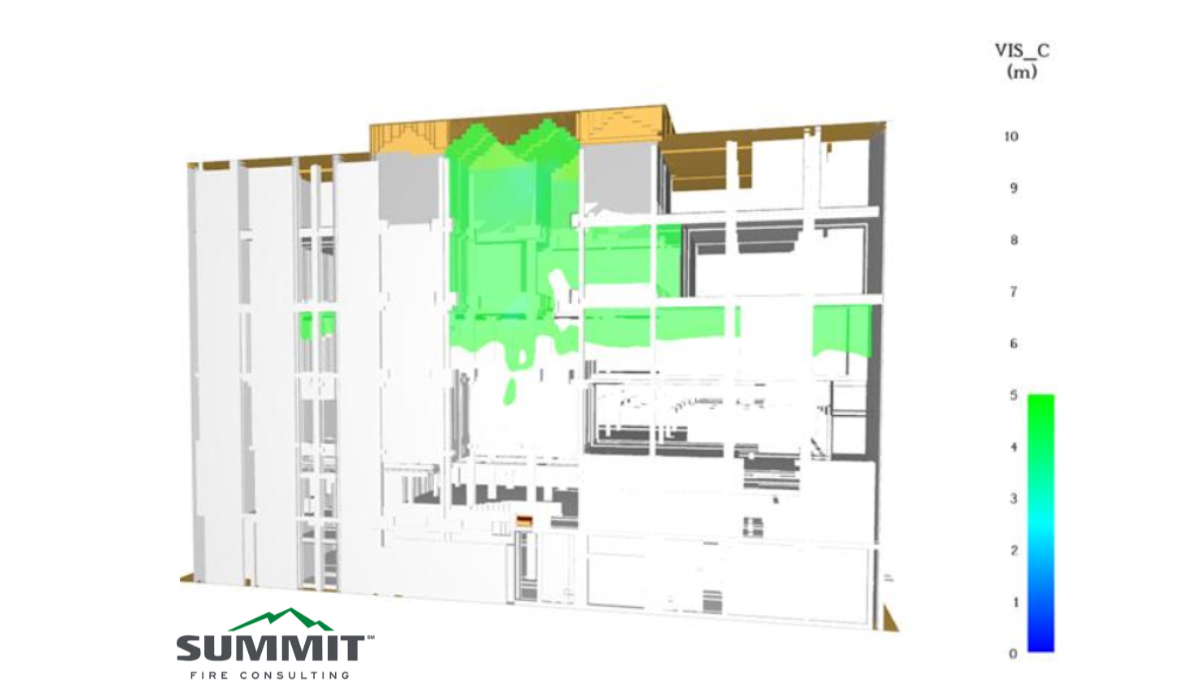
When a fire breaks out, flames grab attention, but smoke is the quiet force that turns a localized incident into a building-wide threat. It moves faster than fire, exploits every unprotected shaft and opening, and can render exit paths untenable long before structural elements are compromised. Smoke control system design is where fire protection engineering shifts from reaction to strategy, shaping how a building breathes under its most extreme conditions.
In the sections ahead, we outline the core principles that define effective smoke control design, from setting performance objectives and navigating key codes to applying sound engineering analysis. You will also see how different design approaches are selected, where coordination commonly breaks down, and what it takes to ensure systems perform as intended throughout a building's life.
A smoke control system is a highly engineered system designed to safely move smoke away from occupants, preventing harm to people and minimizing damage to its contents. These systems can include, but are not limited to, components such as supply and exhaust fans, smoke detectors, smoke dampers, door control devices, pressure sensors, control panels and passive construction elements.
Common building types that require smoke control include:
When it comes to smoke control strategies, tactics can be classified as passive or active. The choice between passive and active systems, or a combination of both, depends heavily on the building's specific geometry, occupancy type, and the fire safety strategy adopted. Having a fire protection consultant is key to finding which system or combination is most effective for your structure.
READ MORE: Managing Smoke Control Systems in Correctional Facilities
Perhaps the most important consideration for smoke control systems is their satisfaction of state building and fire codes. Having a consultant who understands the codes applicable to your region is essential when determining the proper smoke control system for your facility.
International Building Code (IBC) requirements are generally the starting point for most smoke control designs in the United States, often supplemented by NFPA standards, particularly NFPA 92 (Standard for Smoke Control Systems) and NFPA 101 (Life Safety Code), which provide detailed criteria for system testing, maintenance, and operation. These codes and standards define performance objectives, such as maintaining tenable conditions for occupant evacuation and protecting means of egress, as well as defining technical design performance criteria such as minimum pressure differentials.
You must also remain aware of local amendments and the expectations set by Authorities Having Jurisdiction (AHJs). These requirements vary by region, influenced by factors such as population density, geography, and climate. These local requirements can have a significant impact on the overall design. Some examples include: the basic definition of what constitutes a high-rise building, the number of doors that must be modeled open in stairwell pressurization modeling, requirements for the floor-to-floor (“sandwich”) design method for high-rise buildings, and even special commissioning requirements such as cold smoke bomb testing. Each of these could easily delay and derail a project if not known at the start.
And sometimes, IBC codes may conflict with NFPA codes and standards. It is important to consult with experts who are aware of these conflicts and how to address them to ensure the compliance of your structure and smoke control design.
Performance objectives for a smoke control system are multifaceted and must be established early in the design process to ensure the system is fit for purpose. At the core are your specific life safety goals, which prioritize the well-being of building occupants and emergency responders.
This critical focus involves maintaining tenable egress conditions, meaning the system must control smoke movement to keep exit routes clear and tenable, allowing sufficient time for safe evacuation. Other smoke control systems, while not designated and designed to the same rigor as active life safety systems, must be designed to support firefighter operations by supporting post-fire smoke removal for overhaul operations.
Beyond human safety, effective smoke control also addresses property protection and business continuity considerations. By limiting the spread of smoke and heat, the system minimizes direct fire damage, reduces the extent of smoke-related damage, and aids in the rapid recovery of business operations.
To successfully integrate all these requirements, it is essential to begin by establishing clear design criteria early in the project and defining specific performance metrics, code compliance requirements, and operational expectations.
There are a few proven approaches for smoke control design. One of the most common approaches is pressurization systems, which you can apply to:
Other approaches include smoke exhaust and smoke removal systems as well as compartmentation and smoke barriers. These approaches generally work together – exhaust systems force smoke out of the structure rather than remaining inside, and compartmentation methods hold and contain smoke, preventing the spread throughout the building.
Fire consultants are also aware of the proper application and limitations between natural and mechanical smoke control systems. While natural smoke control relies on buoyancy and controlled venting through openings like windows or roof vents, mechanical systems use fans and ductwork to actively manage airflow, pressure differentials, and exhaust rates. Natural ventilation methods are strongly influenced and often limited by climate factors.
Crossflow and velocity-based methods exist as additional strategies, most commonly applied in tunnel and underground transportation design, where maintaining airflow direction and speed prevents smoke from migrating toward occupants.
The optimal choice is determined by factors such as applicable codes and standards, the building's geometry, design objectives, and climate, often requiring a CONTAM model or fire and egress modeling approach to ensure life safety goals are met.
READ MORE: Fire & Egress Modeling: 4 Benefits You Need to Know
An effective smoke control design begins with an understanding of prescribed code requirements and which general design approach to apply. For exhaust-based systems, a deep understanding of fire dynamics is required, specifically how heat and smoke move within a structure. This comprehension informs the determination of design fire scenarios, which model credible fire events tailored to the building's specific occupancy, contents, and geometry.
For pressurization-based systems, critical engineering principles focus on managing airflow, pressure differentials, and leakage paths to ensure smoke is forced away from egress routes and safe areas.
For both pressurization-based and exhaust-based systems, seamless integration with HVAC and fire alarm systems is necessary for automatic activation and coordinated operation. This ensures a swift and appropriate response to a fire event.
Smoke control calculations are the foundation of any effective system design, enabling quantitative predictions of how smoke and heat will behave during a fire.
For highly complex structures, such as large atria, engineers often rely on Computational Fluid Dynamics (CFD) modeling. CFD is a tool that creates a three-dimensional virtual environment to visualize smoke movement, predict temperature and contaminant distribution, and evaluate tenability thresholds throughout the building.
Other methods, like zone modeling, are used in the design of pressurization-based smoke control systems. Through the use of zone models, such as CONTAM, the structure is divided into various control volumes and normalized conditions are assumed throughout each zone; flow paths are dictated between each zone and steady state results are provided. This is different from CFD modeling, where conditions can be evaluated progressively at various time steps.
And finally, hand calculations are often used for preliminary designs, providing rough order of magnitude (ROM) placeholder values. Hand calculations, typically based on prescriptive equations found in standards like NFPA 92, are essential for quickly estimating the size of basic components.
The accuracy of any smoke control analysis is entirely dependent on the validity of the inputs and assumptions made by the engineer. The results of the engineering analysis are documented in the smoke control rational analysis, which is required documentation by the International Building Code.
Smoke control systems are not isolated systems; they depend on the integration of many different systems to achieve the design objective. It requires close coordination with other systems and engineering disciplines, including:
This integrated approach ensures that all building safety systems work in concert to protect occupants and the structure during an emergency.
The heart and soul of these systems is the firefighters' smoke control panel (FSCP), often located in the fire command center. This is the system brain where all the inputs are reported, processed, and then outputs are triggered. The programming and sequencing take place here. This programmed sequence defines the order in which fans start, dampers open or close, and pressure differentials are established. The goal is to coordinate these actions seamlessly to achieve the intended smoke control strategy.
Systems can be configured for automatic or manual activation, though most designs require automatic activation; they must also be able to be overridden at the firefighters' smoke control panel to adjust the system in response to real-time fire conditions.
Testing and commissioning are mandatory steps to validate the actual performance of the smoke control system – this process is formally referred to by the International Building Code as Smoke Control Special Inspections. First, visual inspections verify that all components (fans, dampers, controls, and associated ductwork) were installed in accordance with the approved design and specifications.
Following installation verification, comprehensive testing procedures are performed. This involves simulating fire conditions to confirm that the system activates automatically and executes the correct sequence of operations. In addition, airflow velocities and pressure differentials are measured and compared to the quantities specified in the smoke control rational analysis.
Successful execution of these tests is critical for generating the necessary documentation and AHJ approval. Complete and accurate documentation, including the smoke control rational analysis, final testing report, and as-built plans, must be submitted to the AHJ for their final review and sign-off.
Finally, the importance of periodic testing for long-term performance cannot be emphasized enough. Commissioning goes beyond initial acceptance testing to ensure the system not only works on day one but remains reliable and functional throughout the building's lifecycle.
The most common smoke control system failures often stem from incomplete or vague design intent and a general lack of clear performance objectives. Unfortunately, this reality is often not recognized until it's time to commission the system. Correcting these issues after installation is not always very easy. For example, if a fan is undersized due to poor engineering analysis, it may need to be replaced with a larger-capacity fan, possibly triggering a snowballing effect of implications related to inadequate conduit size, structural components, or emergency generator capacity.
Poor engineering analysis is only made worse by poor coordination among trades, leading to gaps in system scope among fire alarm, mechanical, and electrical contractors. Often, these issues do not arise until preliminary testing or sometimes even final testing in the presence of the fire official, if preliminary testing is skipped. It’s important that a fire protection engineer provide a clear plan and communicate expectations and requirements to each discipline.
Designing smoke control in retrofit or existing buildings presents unique complexities, requiring creative solutions to address structural constraints, limited space, and coordination with existing components. In addition, obtaining record drawings of the building and its systems is not always possible, which can lead to a significant effort in surveying the existing building.
Maintaining a smoke control system's effectiveness throughout a building's lifespan requires a comprehensive, long-term maintenance and lifecycle plan. This includes periodic inspections, testing, and preventative maintenance, all of which are mandated by codes such as NFPA 92 to ensure ongoing reliability. Critical components, such as fans, dampers, controls, and associated ductwork, must be regularly checked for operational integrity.
System modifications or upgrades may also become necessary over time due to changes in building occupancy, renovations, or evolving code requirements, necessitating periodic re-commissioning to confirm that the system continues to meet its original performance objectives. Keeping records and maintaining all original design documents are crucial for seamless future modifications.
Designing an effective smoke control system is a complex, multidisciplinary engineering challenge that demands expertise from concept through commissioning and maintenance. Given the potential for fatal consequences and significant property loss from fire and smoke spread, relying on expert fire protection engineering is non-negotiable.
If you need to ensure your building's smoke control system checks all the boxes, Summit Fire Consulting specializes in performance-based design and code consulting for complex smoke control systems. Contact us today to schedule a consultation and safeguard your structure with expert-driven smoke control solutions.
